
PEMÁN Y FRANCO Arquitectos / SEBASTIÁN Arquitectos
Owner: Hospitaller Order of St. John of Jerusalem
Promoter: Diputación General de Aragón
Collaborators: Francisco Fes, Marta Monreal, Alejandro Alda, Andrés Jiménez, Michel D'Angelo, Alberto Gutiérrez, Carlos Morenés, Isabel Ordieres, Alfonso Monforte, Ramón García Urena, José Delgado, José Francisco Casabona, Arturo López (JG), Pedro Balaguer, Ignacio Bueno,
Builder: Obras Construcciones y Contratas, GÓTICO SL, Obras y Restauraciones SAGARRA, Piedra Casbi SL, DAMARIN SL
Awards: Finalist EU Mies van der Rohe Award, Premio Arquitectura Consejo Superior de Colegios de Arquitectos de España (CSCAE), Premio Hispalyt 2026, Premio ASCER 2025, 1st Prize Gala Aragonesa de la Edificación, Finalist Garcia Mercadal Award
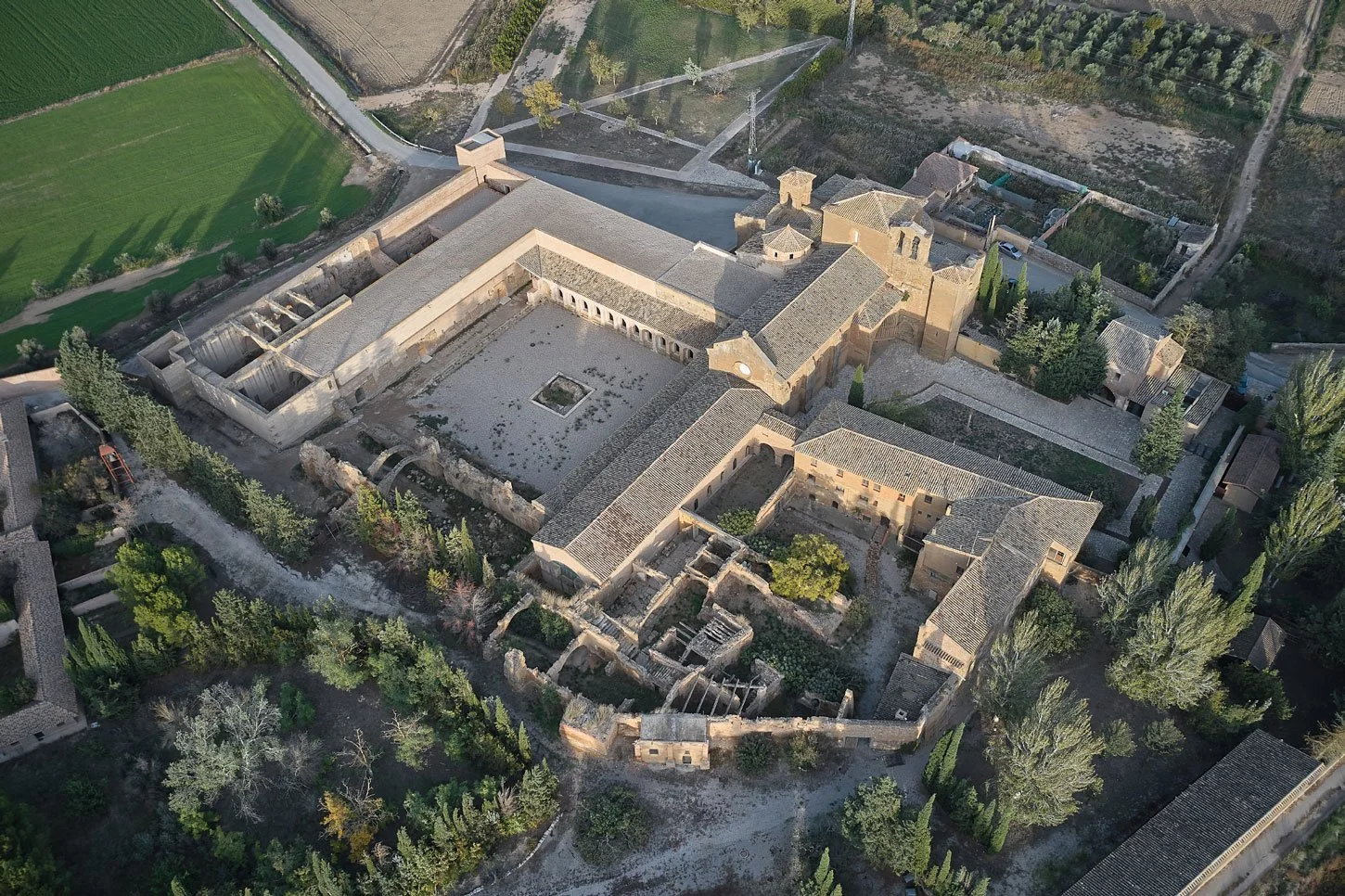
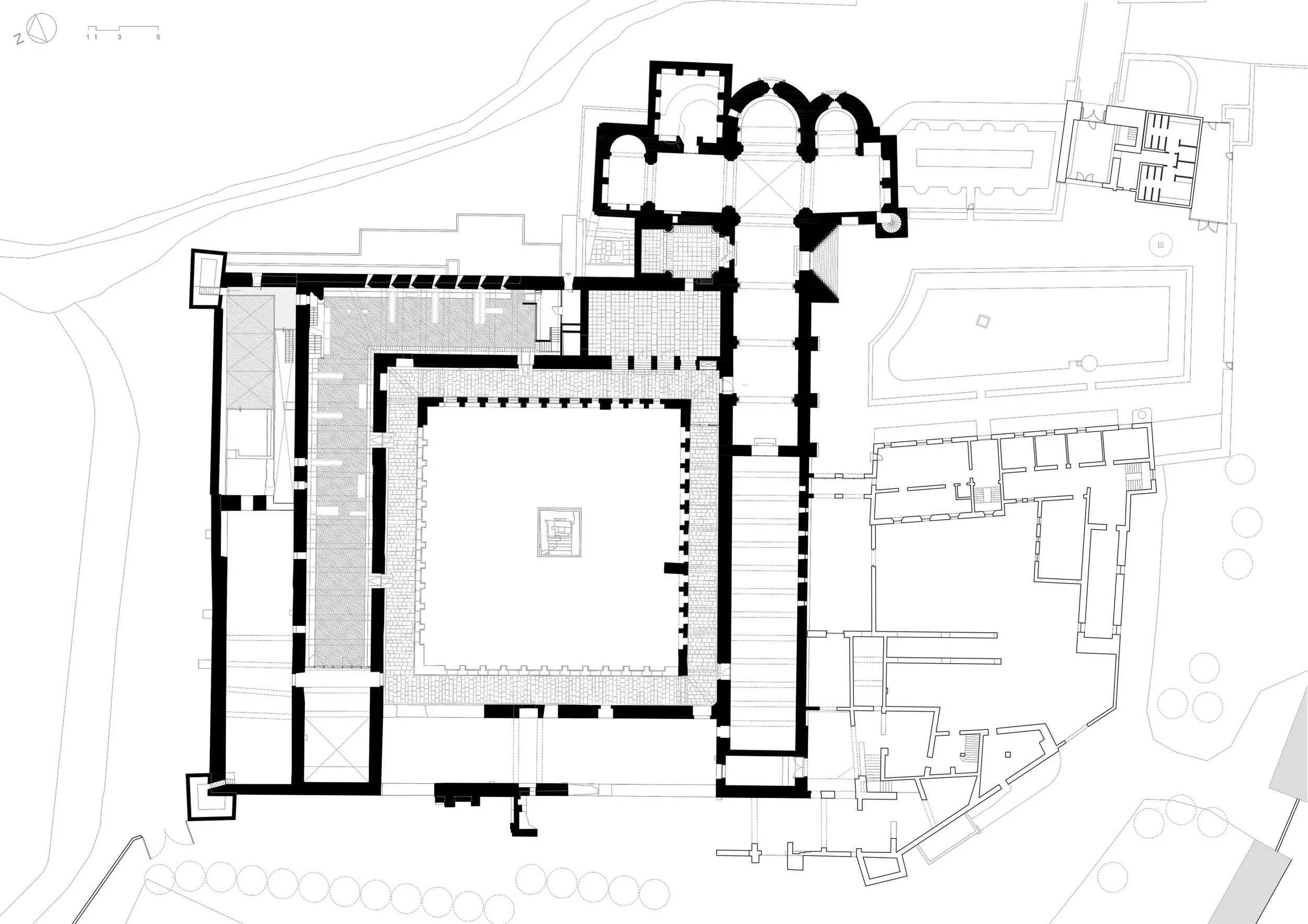
The Royal Monastery of Santa María de Sijena was founded in 1188, adopting a square floor plan, with a flat head church, naves with perpian arches and a gabled roof up to the cloister panels. In the 13th century the church was equipped with a chevet of three apses and a transept incorporating a San Juan chapel as a royal pantheon and a signal tower as a bell tower. In the 14th century, a second floor was built and the nuns were allowed to have private spaces that ended up configuring a chaotic set of buildings. In 1923 it was declared National Monument and restorations began to free the church and apses from improper constructions, but everything stopped in 1936 and the fire that left the Romanesque paintings of the chapter house unprotected, which gave rise to José Gudiol to extract them in very precarious conditions. In 1955 Fernando Chueca Goitia set out to recover the monastery in its stylistic unity and intervened in the church and the refectory, cleared the rubble of the naves and rebuilt the south side by lowering the original arches with smaller brick ones.
At the beginning of the 21st century the monastery was in an uneven state. Except for the church, the refectory and the south side, the rest were still in ruins. The fire and abandonment had reduced the architecture to the most essential, the arches showed their rigorous order, the nakedness of the architecture revealed its construction and in the walls traces were detected that explained the future of the monastery. That skeleton could not be treated as an archaeological remains because parts of the monastery had already been recovered, nor was it feasible to return to the foundational type because it meant ignoring all its evolution, nor could the second floor be recomposed because there was no data. The aim was to recover the presence of what gives meaning to the monastic type, the cloister and the naves, avoiding the false history and promoting a healthy material context in which the construction had a didactic and expressive sense and the ability to evoke that architecture was enhanced.
The monastery sits on a backwater of underground water, so that dampness and sandblasting of the stone have been recurrent. Our intervention began in 2002 by dealing with this pathology with a deep drainage by gravity, opposite to the attack front of the current, which conducts the water to a lower level of the water table.
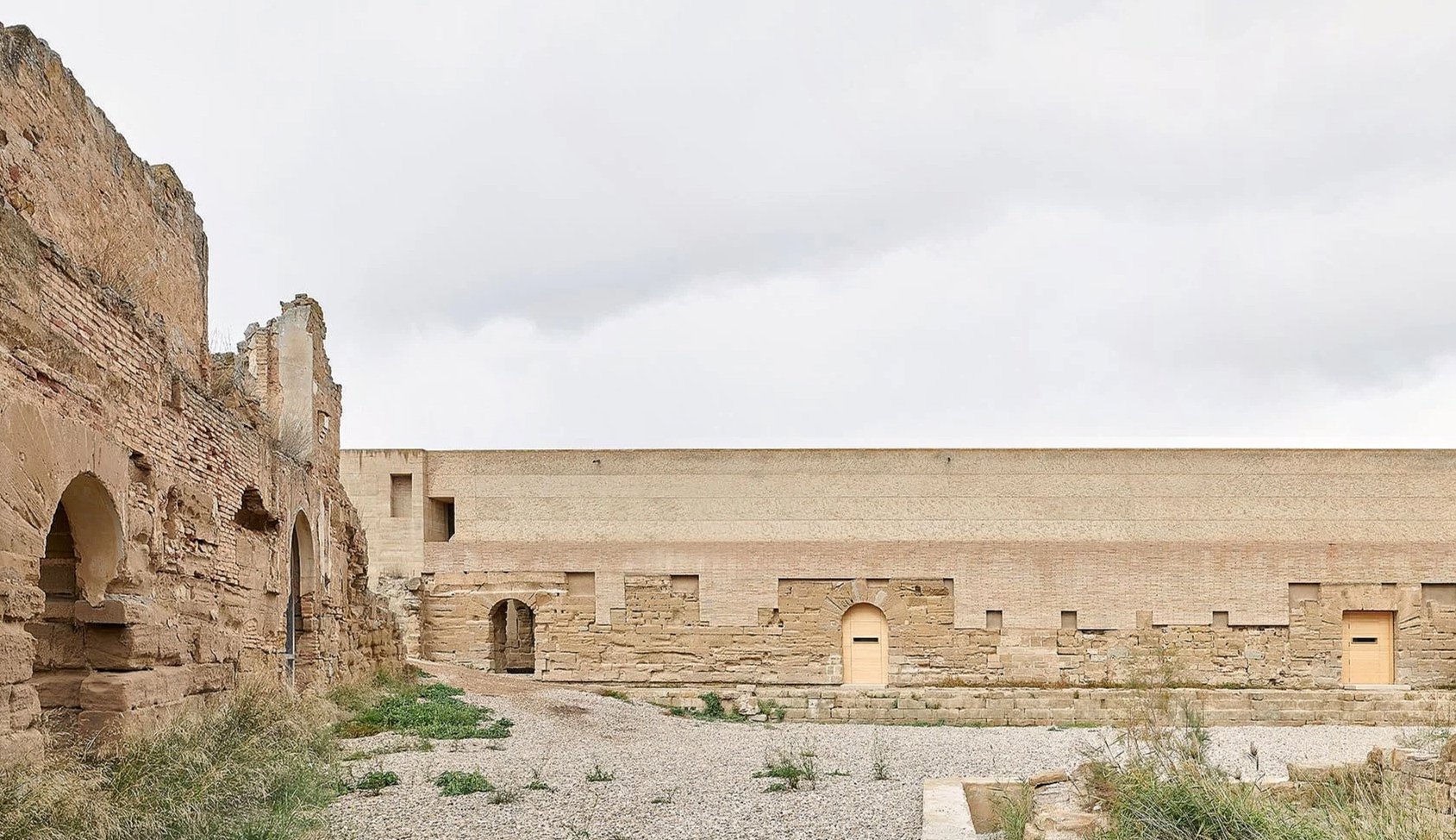
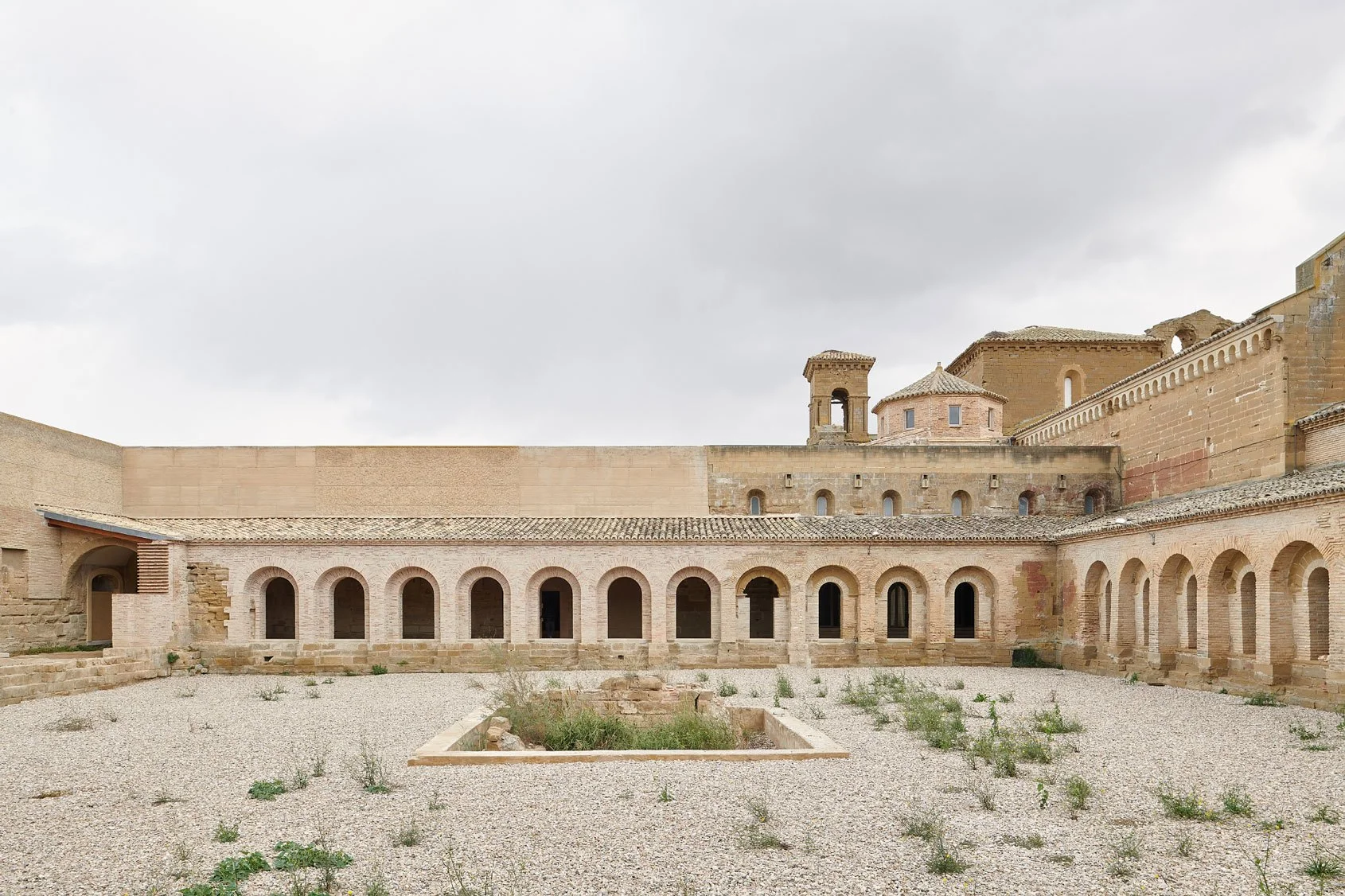
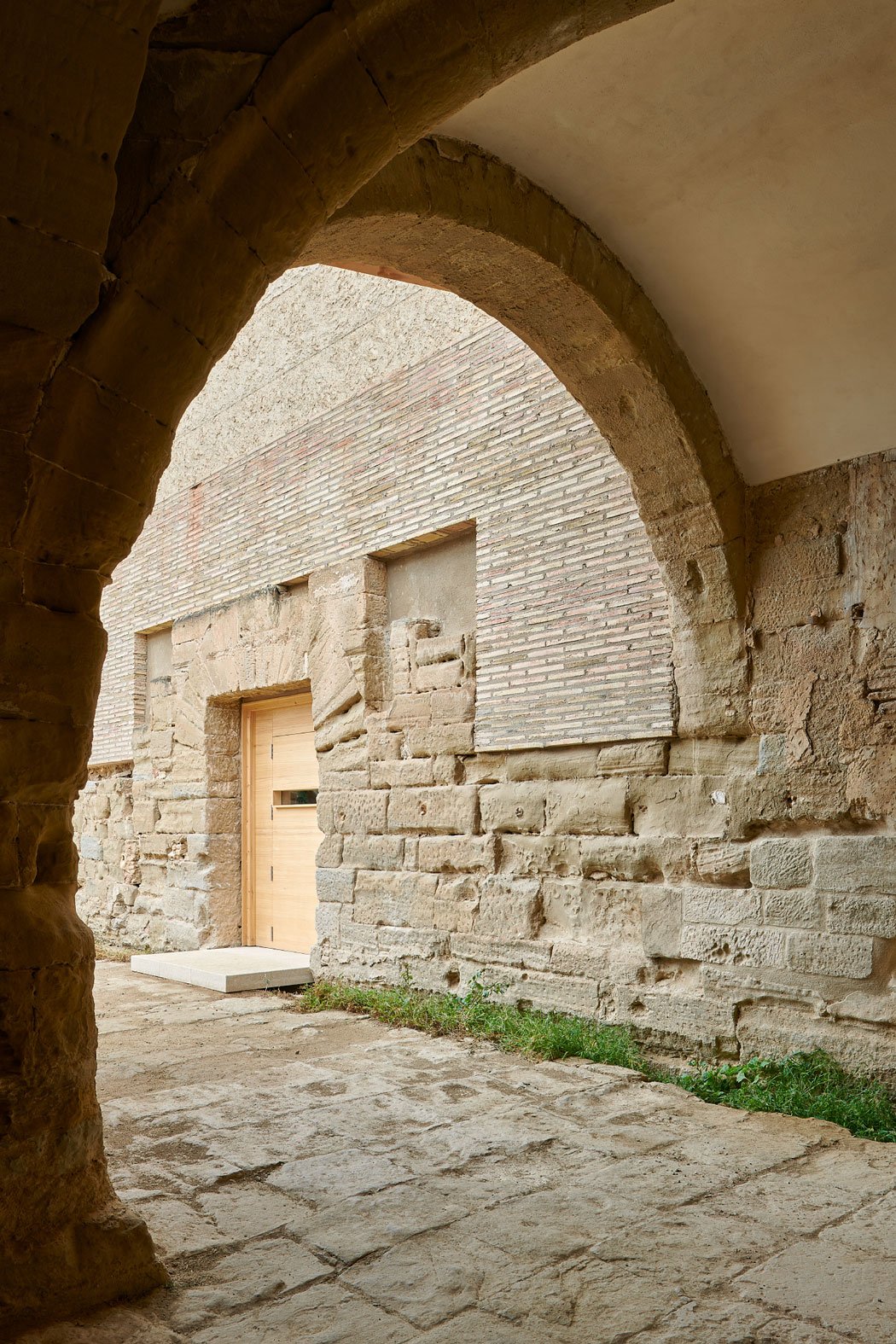
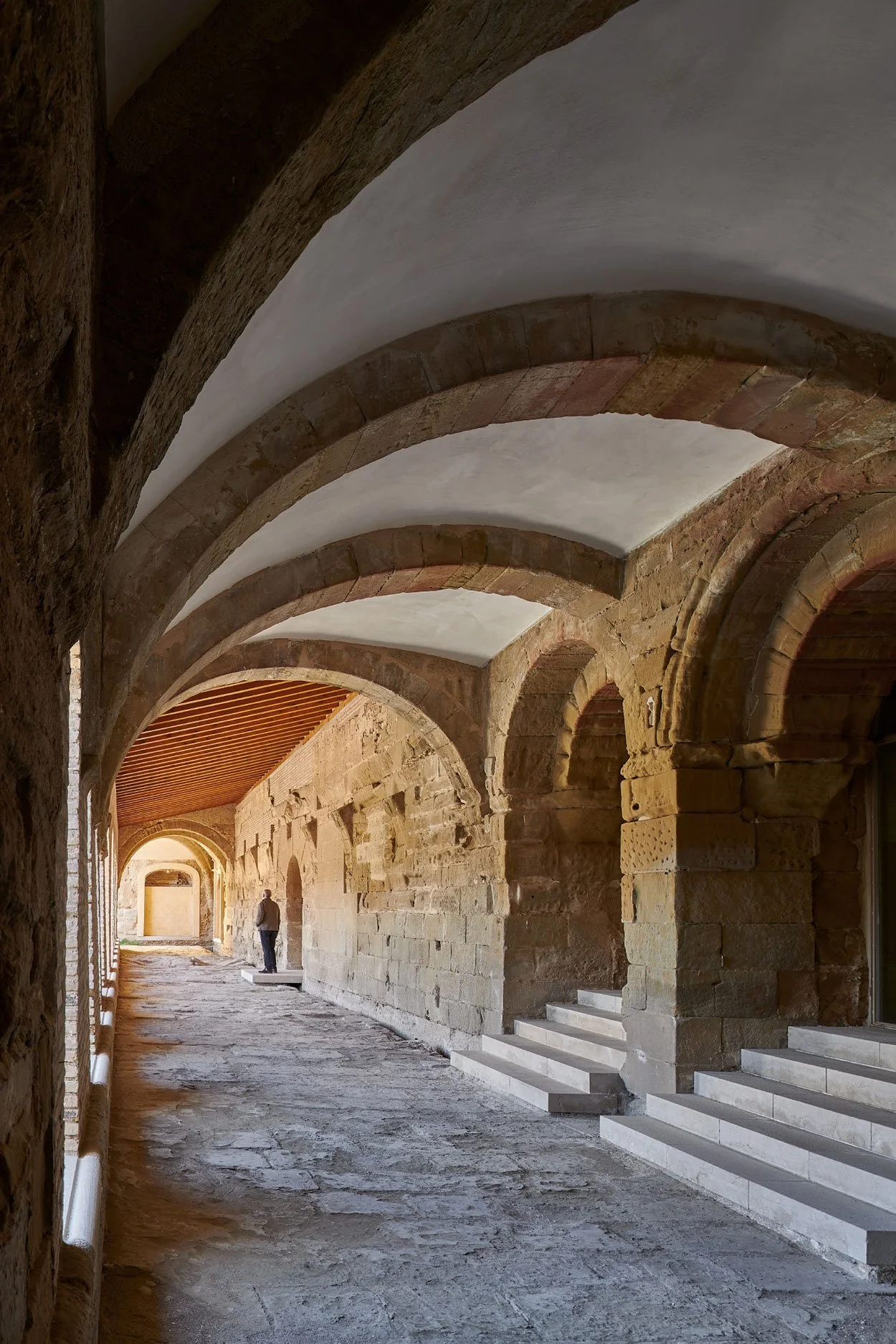
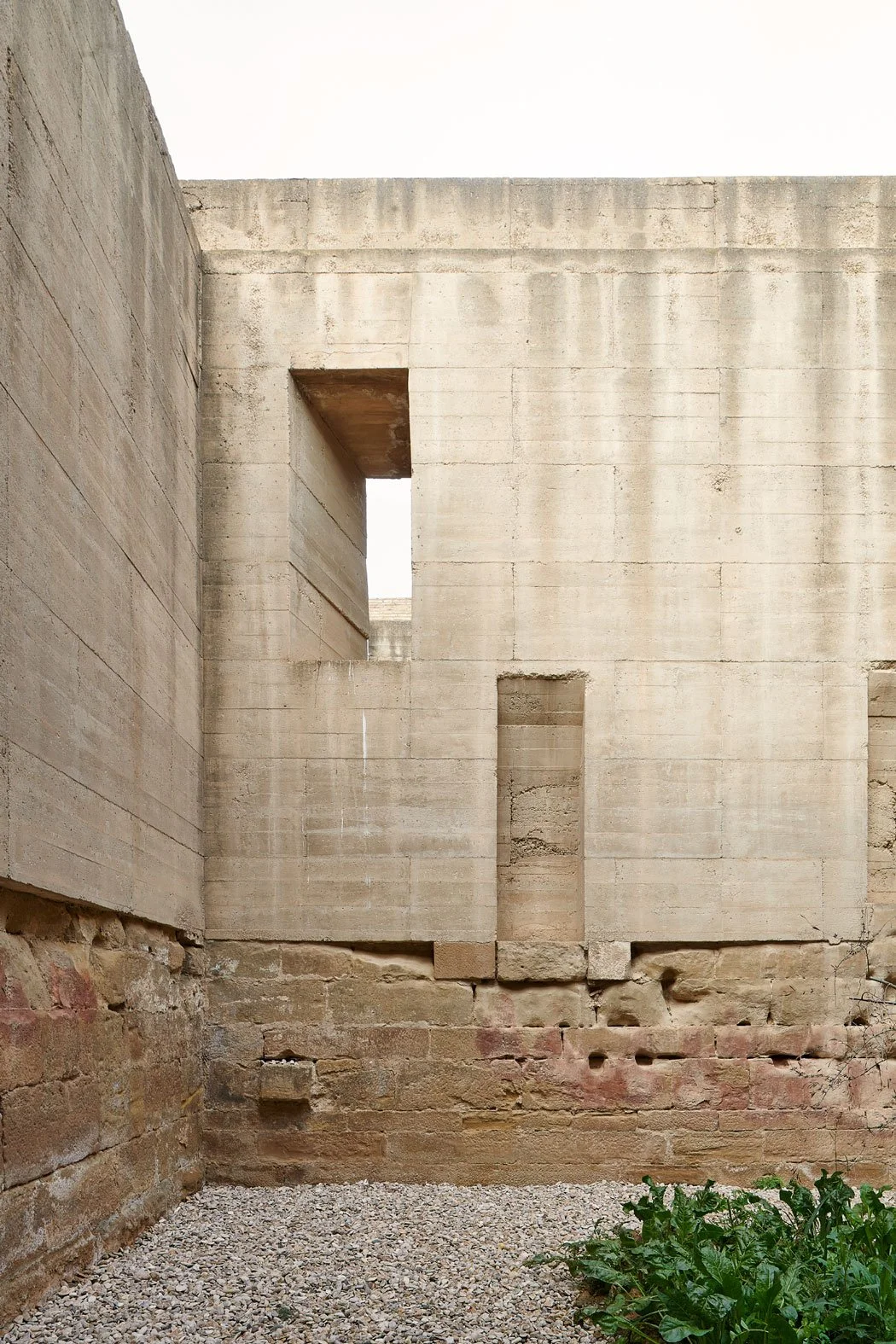
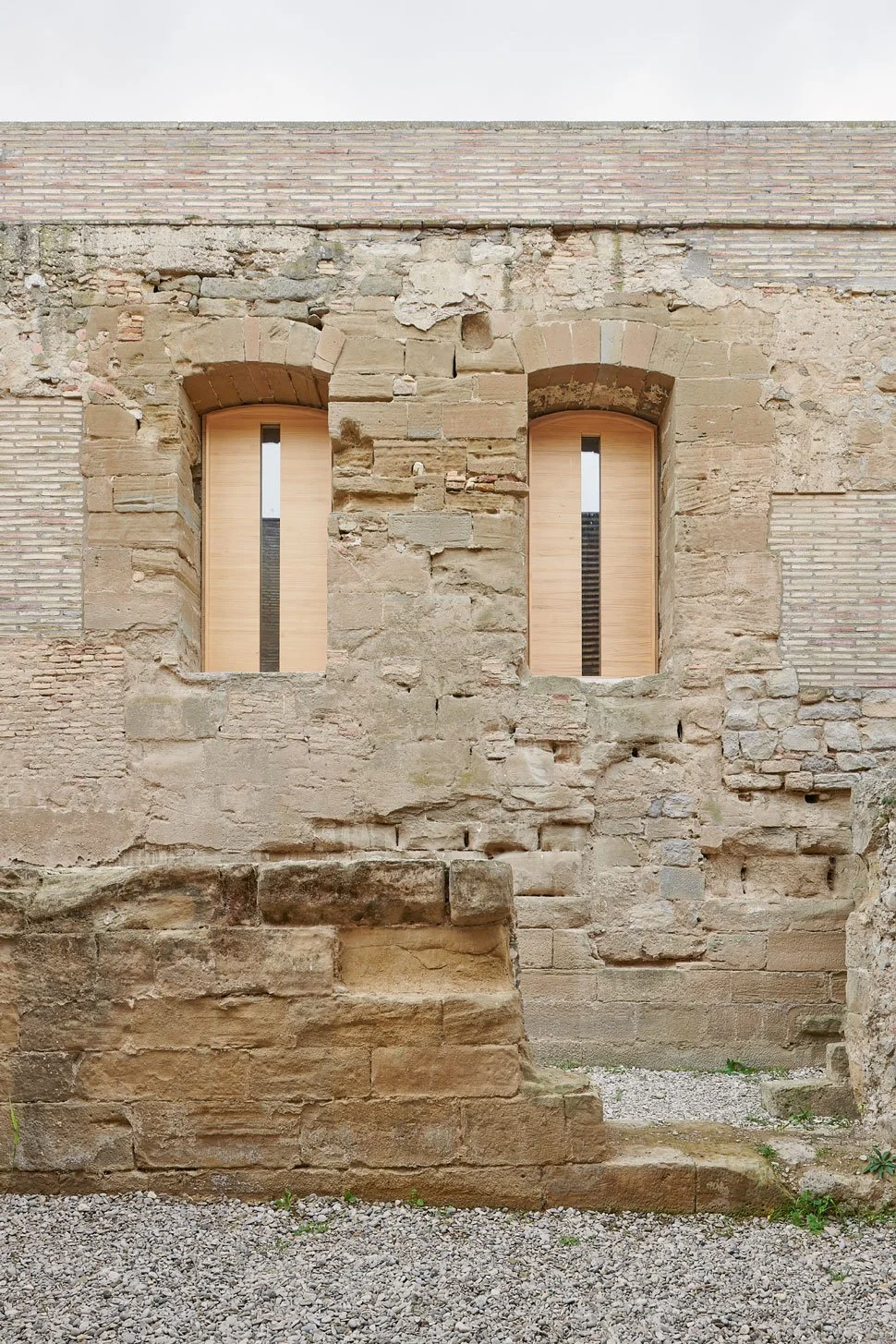
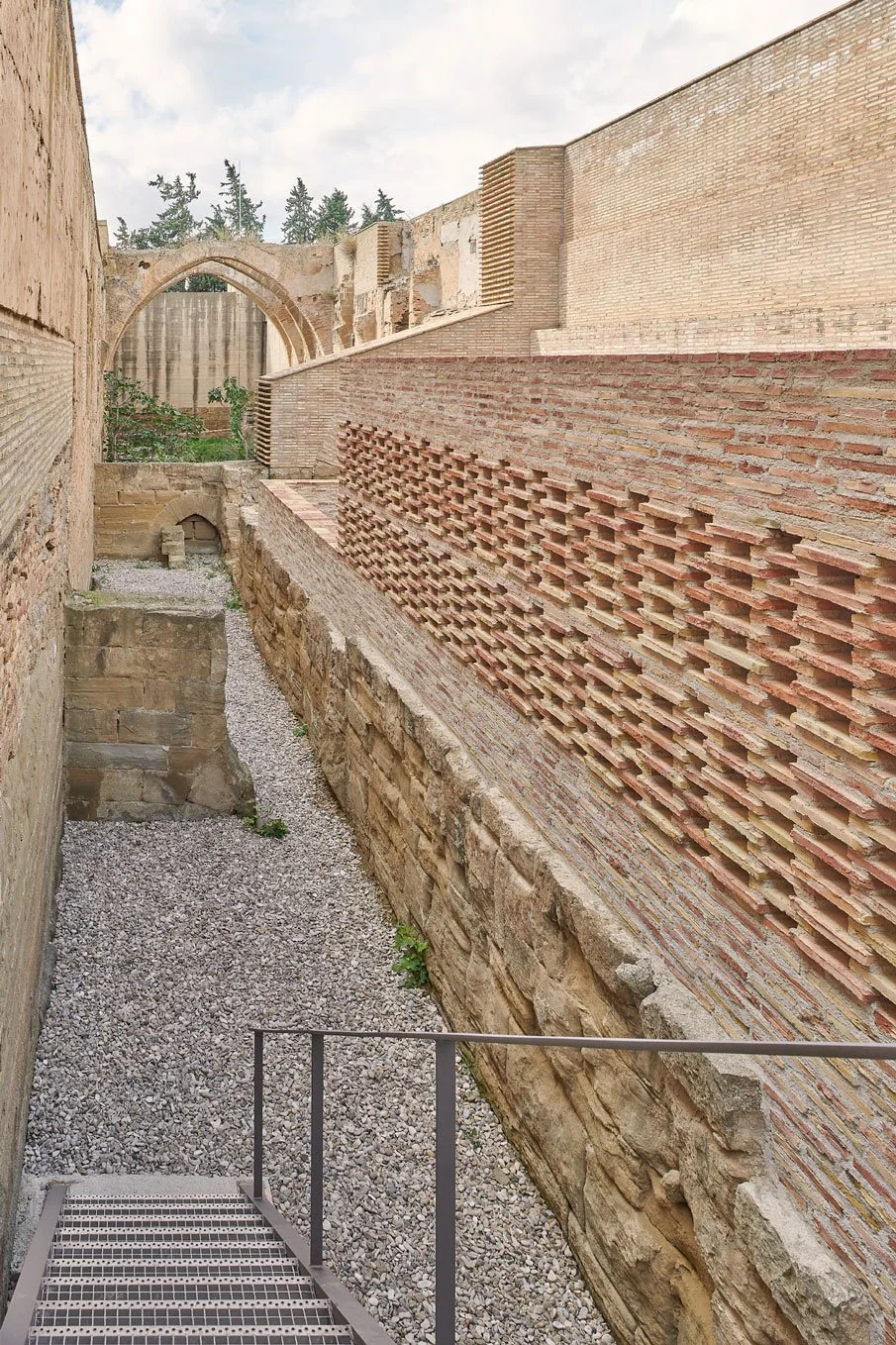
At the same time, the east and north naves were roofed with a wooden “alfarje” and a flat roof that indicates that architecture is interrupted where it is unknown to us, and the walls were repaired by making the gaps in the plinth drawn by the brick that protects the rammed earth and, if the rammed earth had disappeared, that the hole is occupied by another mass concrete, bastard and executed by boxes, and that the screed of the fourteenth century is identified by a mortar sprayed with lime. On the north side, its spatial entity was recovered by erecting concrete rammed earth walls on the stone plinth, thus marking a diachrony that is expressed without drama. Later, the east side of the cloister was recovered following the pattern of its plinth, with the arcade as a volume capable of brick and the roof with beams with the inclination of the twelfth-century roof to show the traces of documentary value and resolve the transition between the existing sections. The latest actions have consisted of recovering the stone pavement of the east side of the cloister, preserving the flooring and the historic drainage channels.
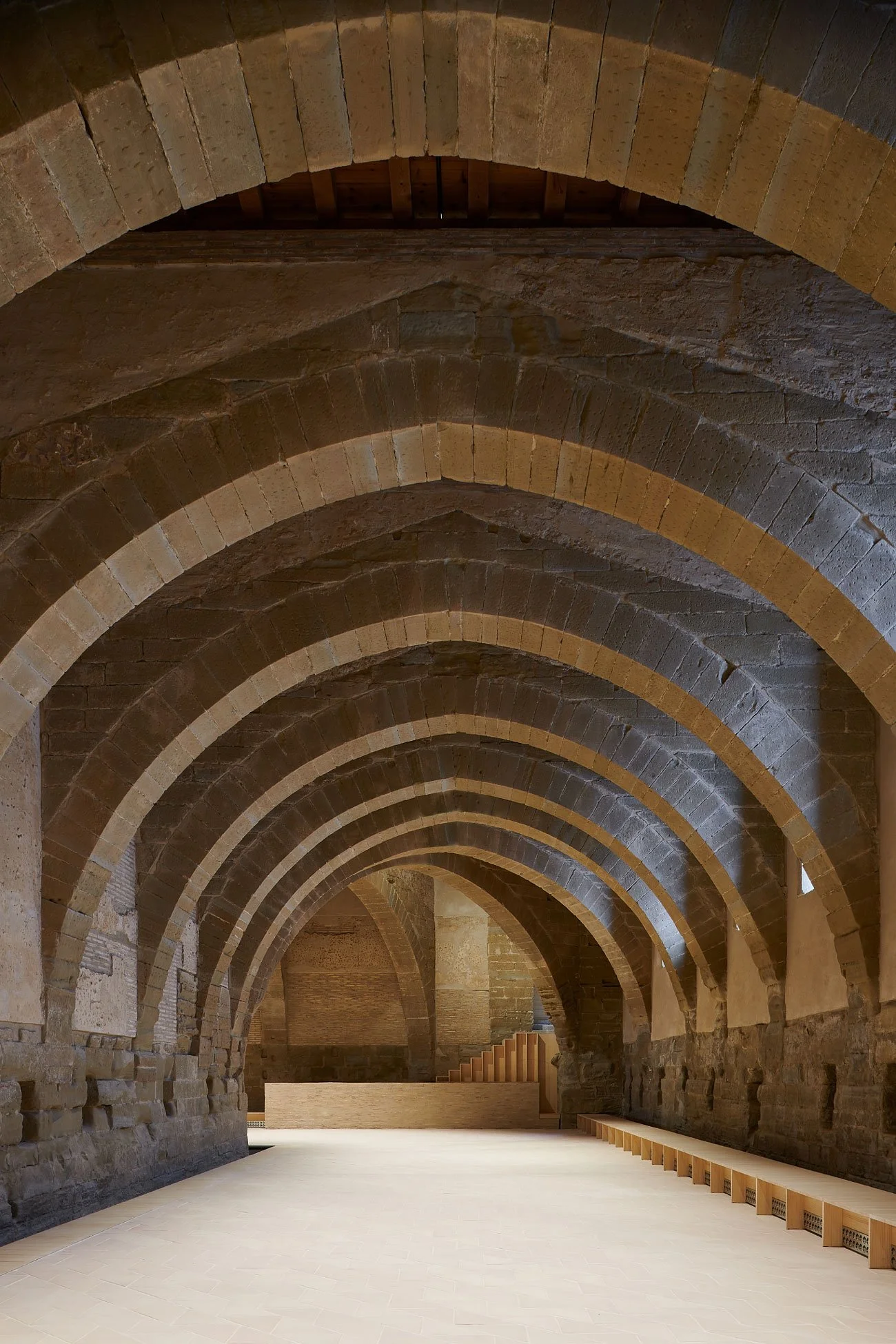
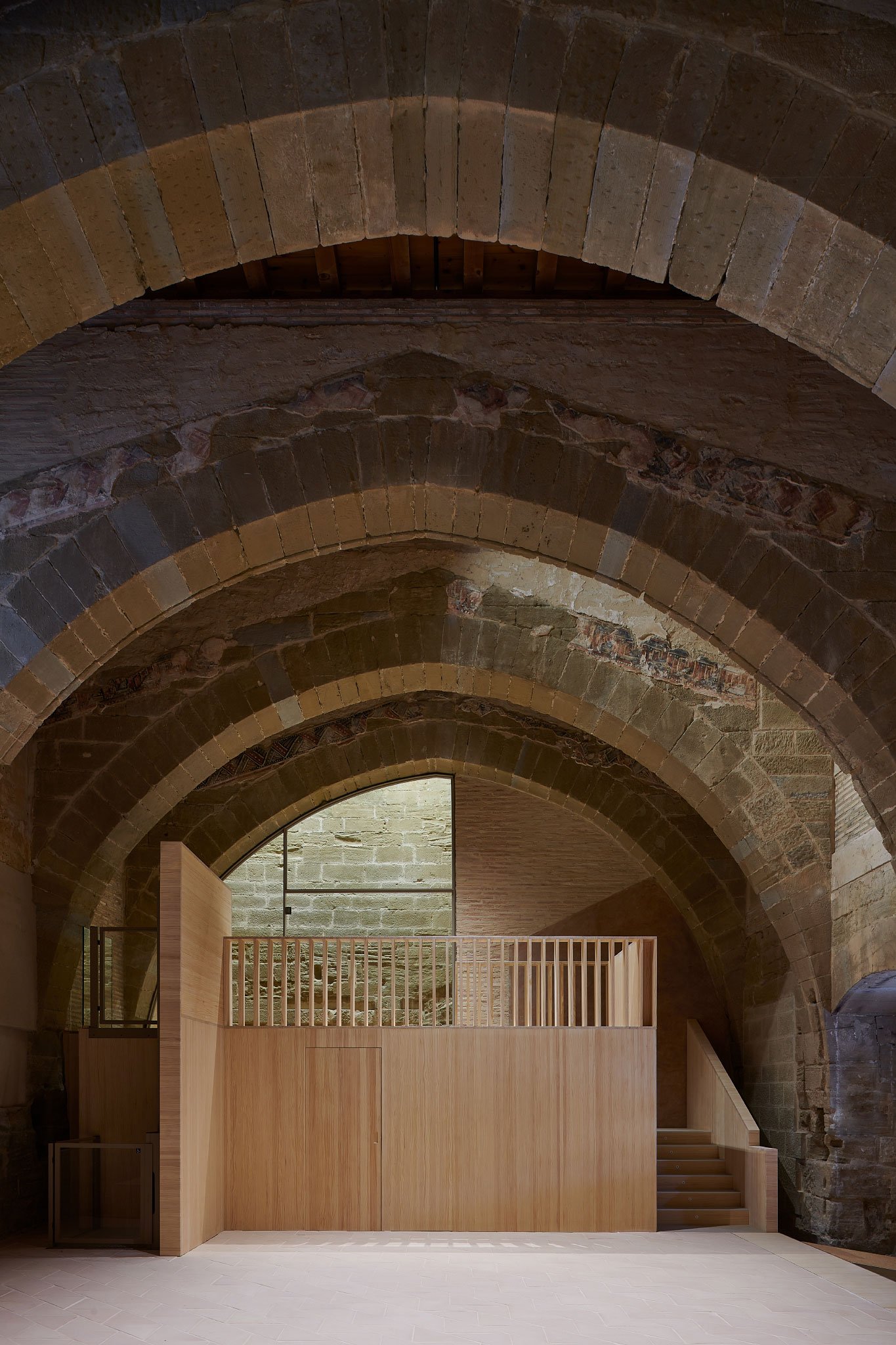
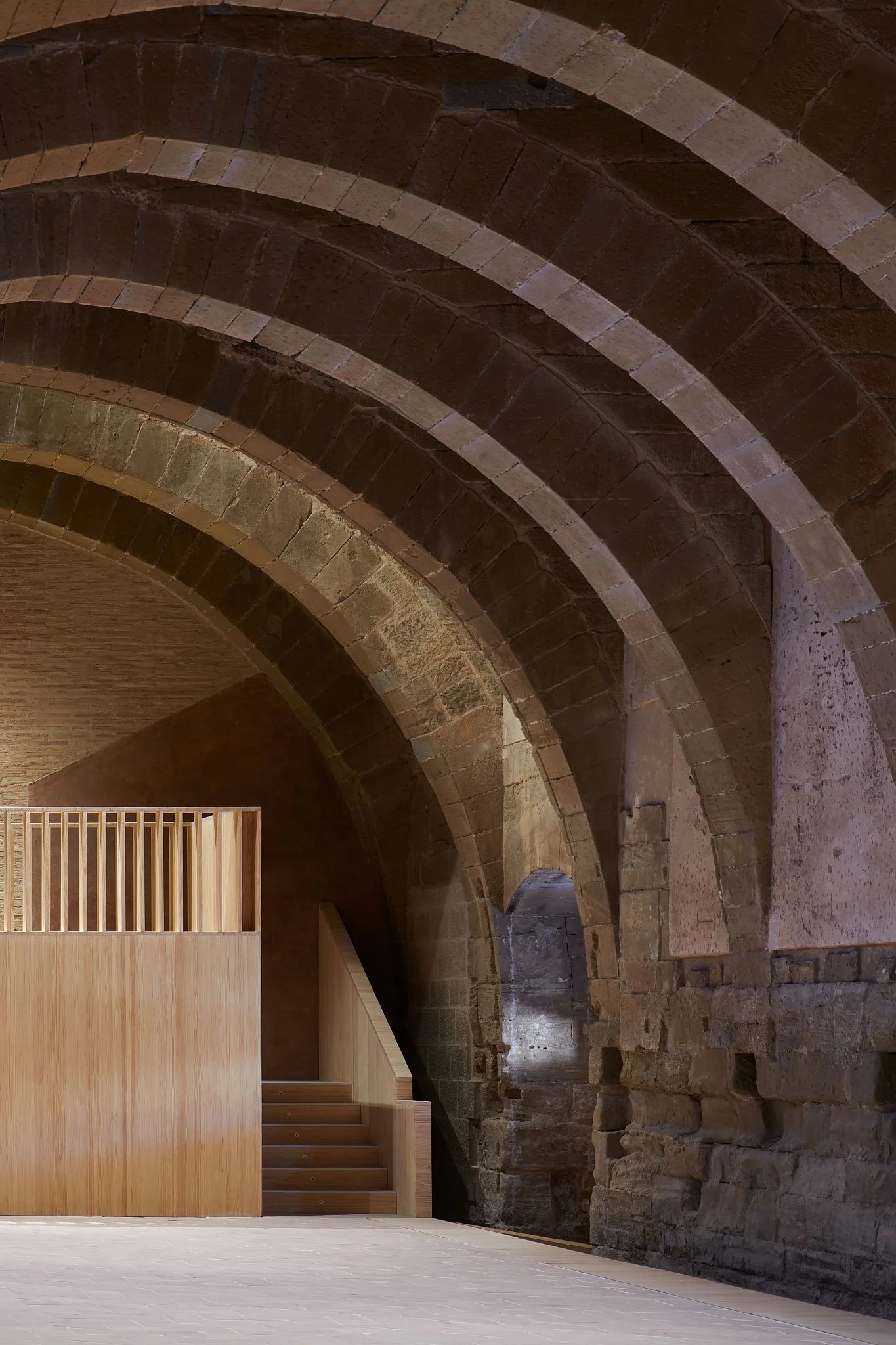
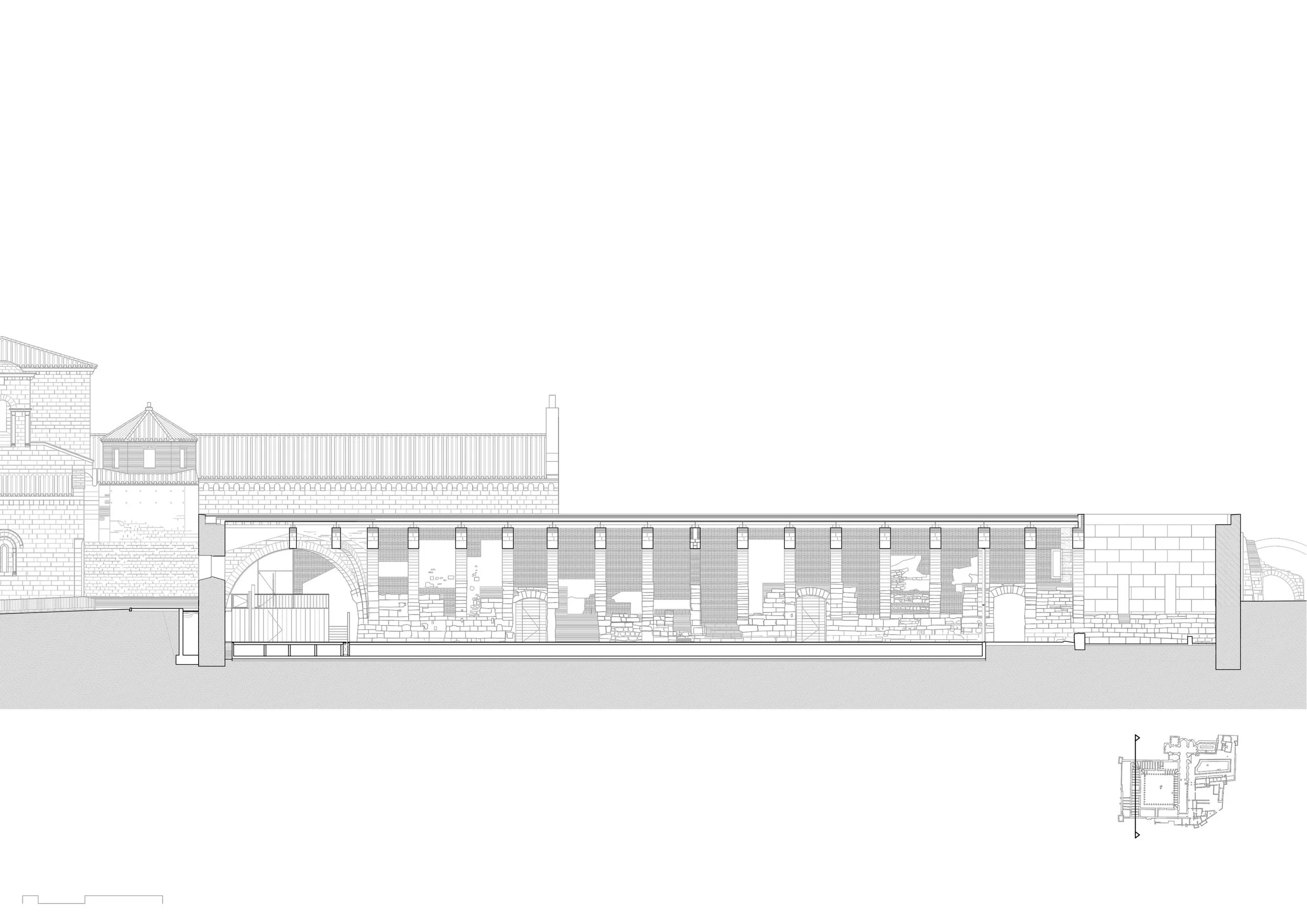
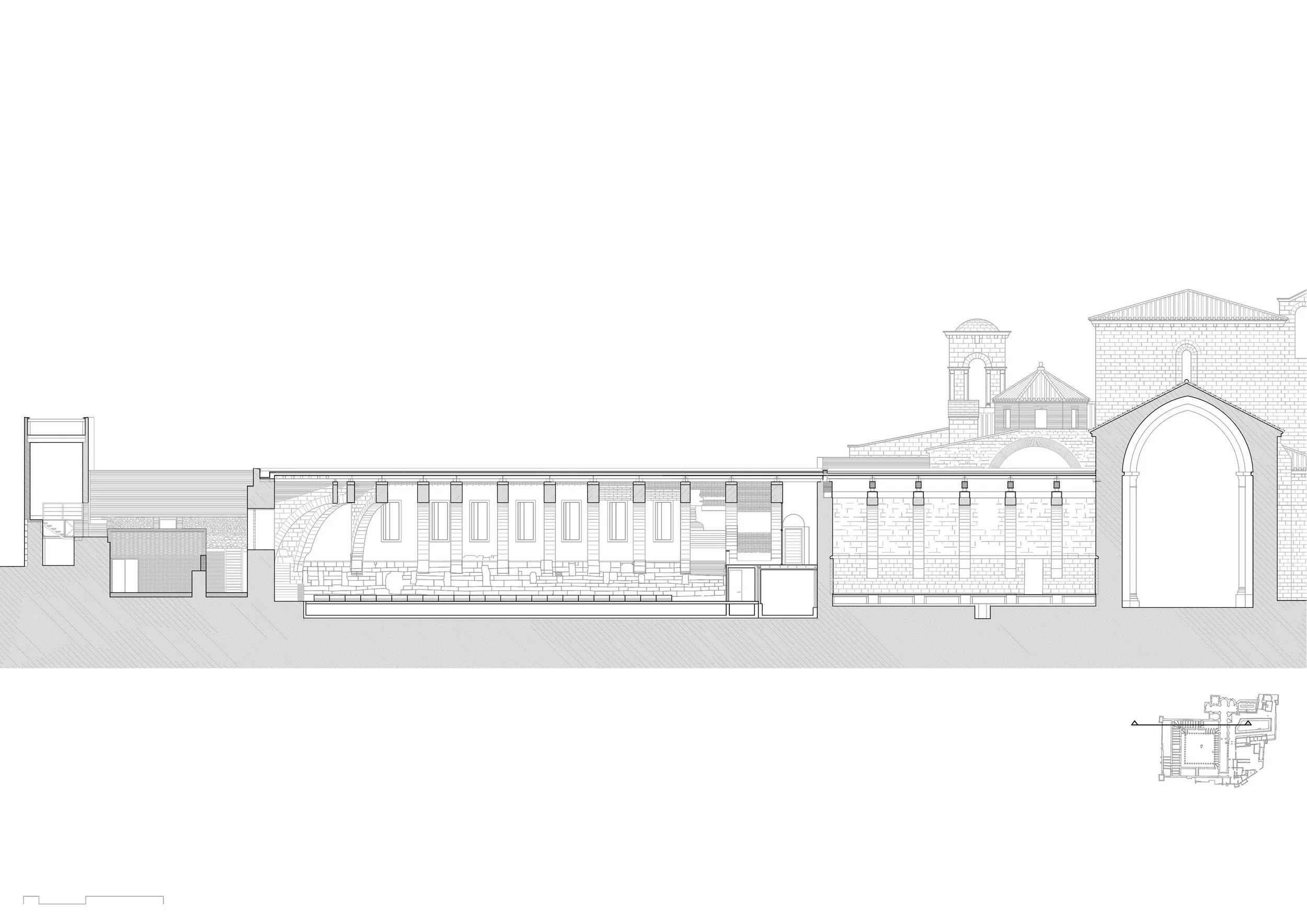
The intervention in the dormitory nave has been carried out with the purpose of conditioning the east and north naves of the monastery in order to be able to exhibit the goods returned to Sijena with dignity, taking into account that the technology required for this purpose did not alter the medieval space, and seeking the creation of a space with a serene atmosphere and with a certain monastic resonance. It has been proposed following three complementary lines of action. Firstly, the general restoration of the pre-existing structure of Perpian arches and stone and rammed earth walls, in which the reintegrations add to the evolutionary language of the monument. With a didactic and expressive criterion, they show the gabled structure of the Romanesque monastery phase and suggest, by means of a wooden pottery, the existence of an upper level that historically marked the transformation and complex vertical growth of the complex with constructions that sought to escape the great humidity of the ground level.
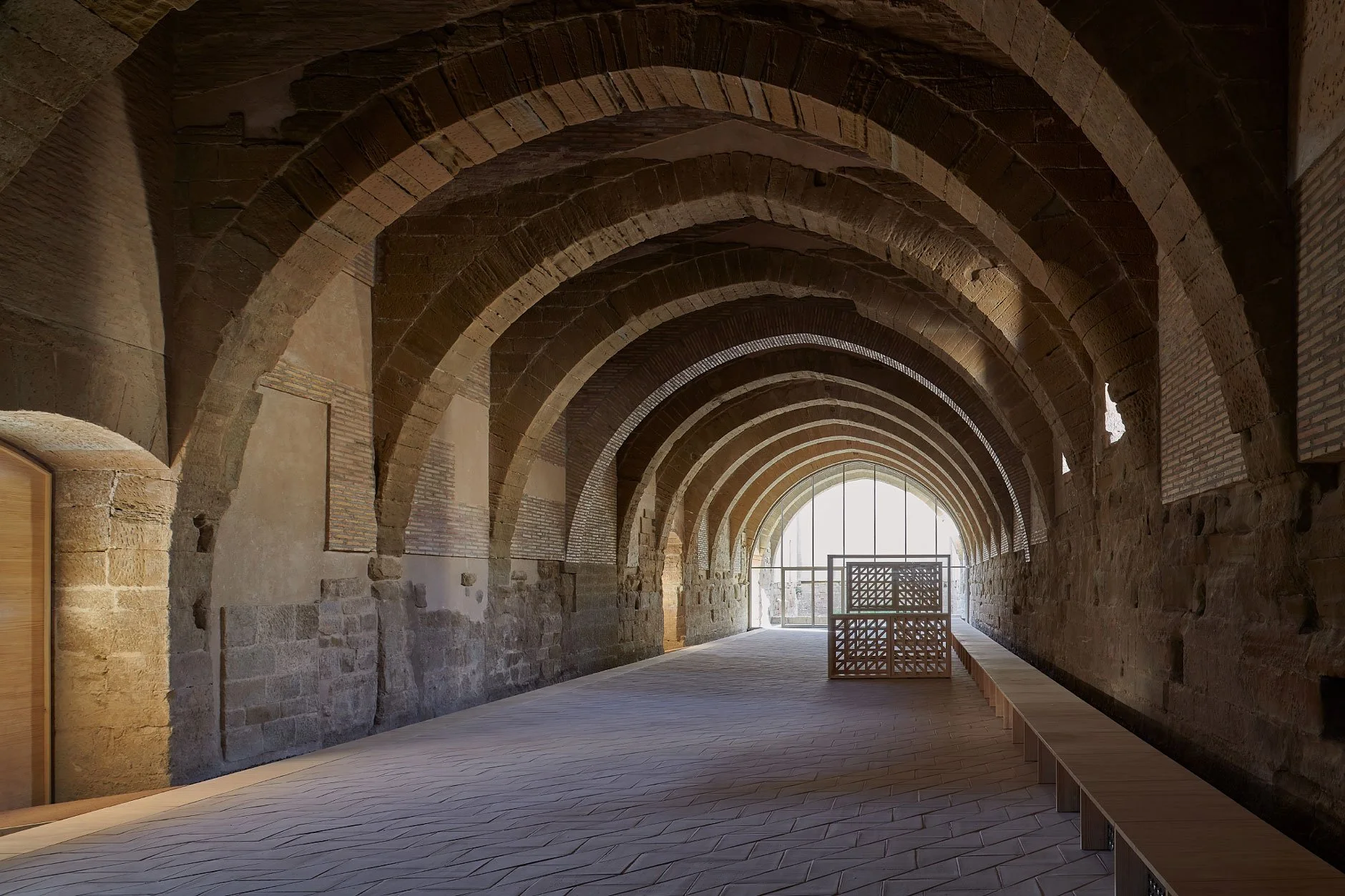
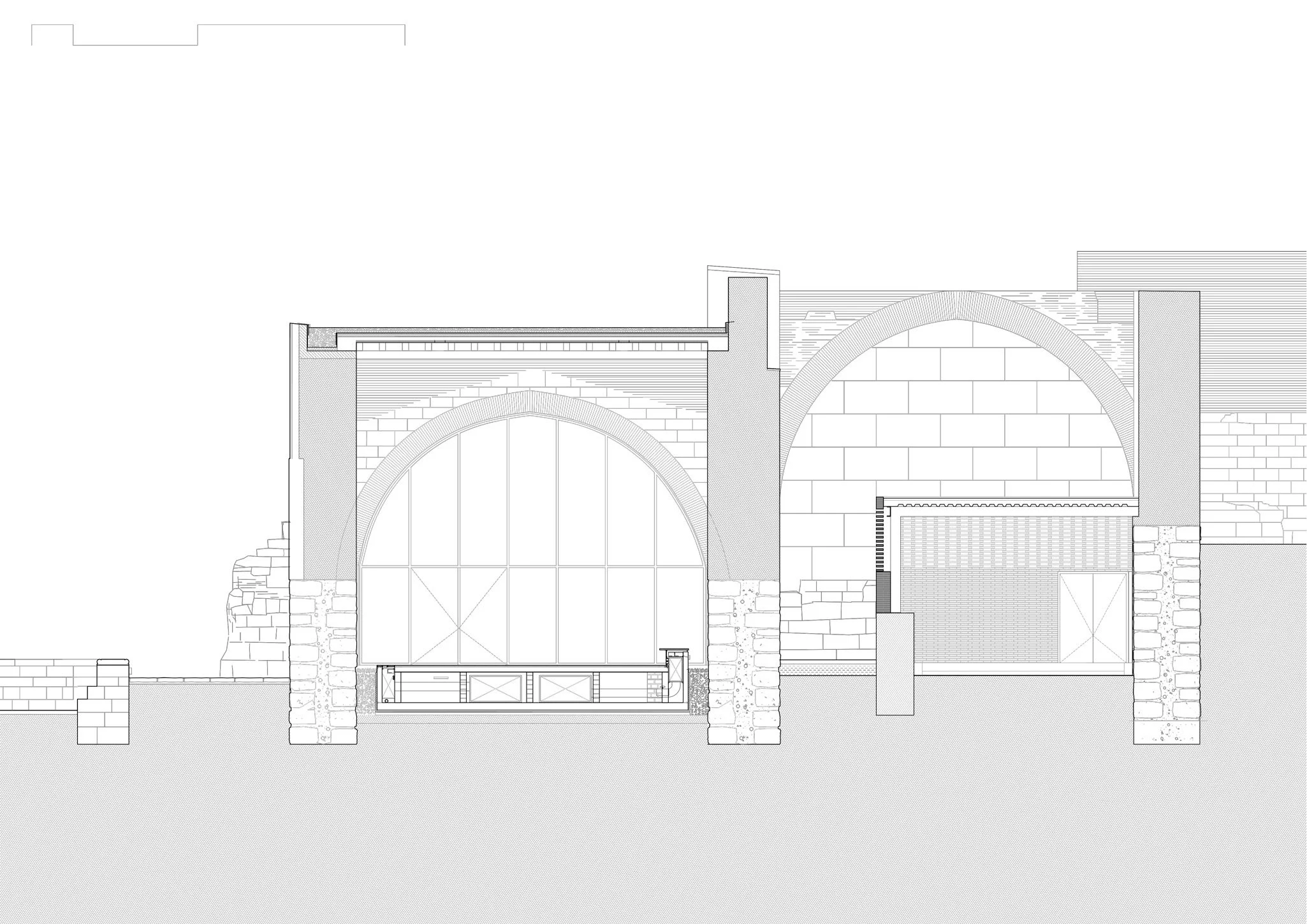
Secondly, a ceramic carpet has been spread on which the contemporary intervention itself will take place. Its basin section allows the passage of the facilities to be housed in a hidden way while protecting the rise of the water table. And thirdly, a series of elements are proposed that complete the services necessary for its use as an exhibition hall, both the utilitarian services and the exhibition cabinets themselves. The museographic tour evokes the organization of the old cells, placing the showcases transversally according to the rhythms of the structure, and acquiring an appropriate size and respectful of the scale of the nave itself. The integration of these last two layers is carried out in a discreet, toned, and harmonious way, with contemporary reminiscences of the elements of the monastery collected in the historical prints and photographs, such as the latticework, the benches and furniture, manifesting a certain character of reversibility through the sincere use of simple and austere materials, but worked and presented in a dignified way.
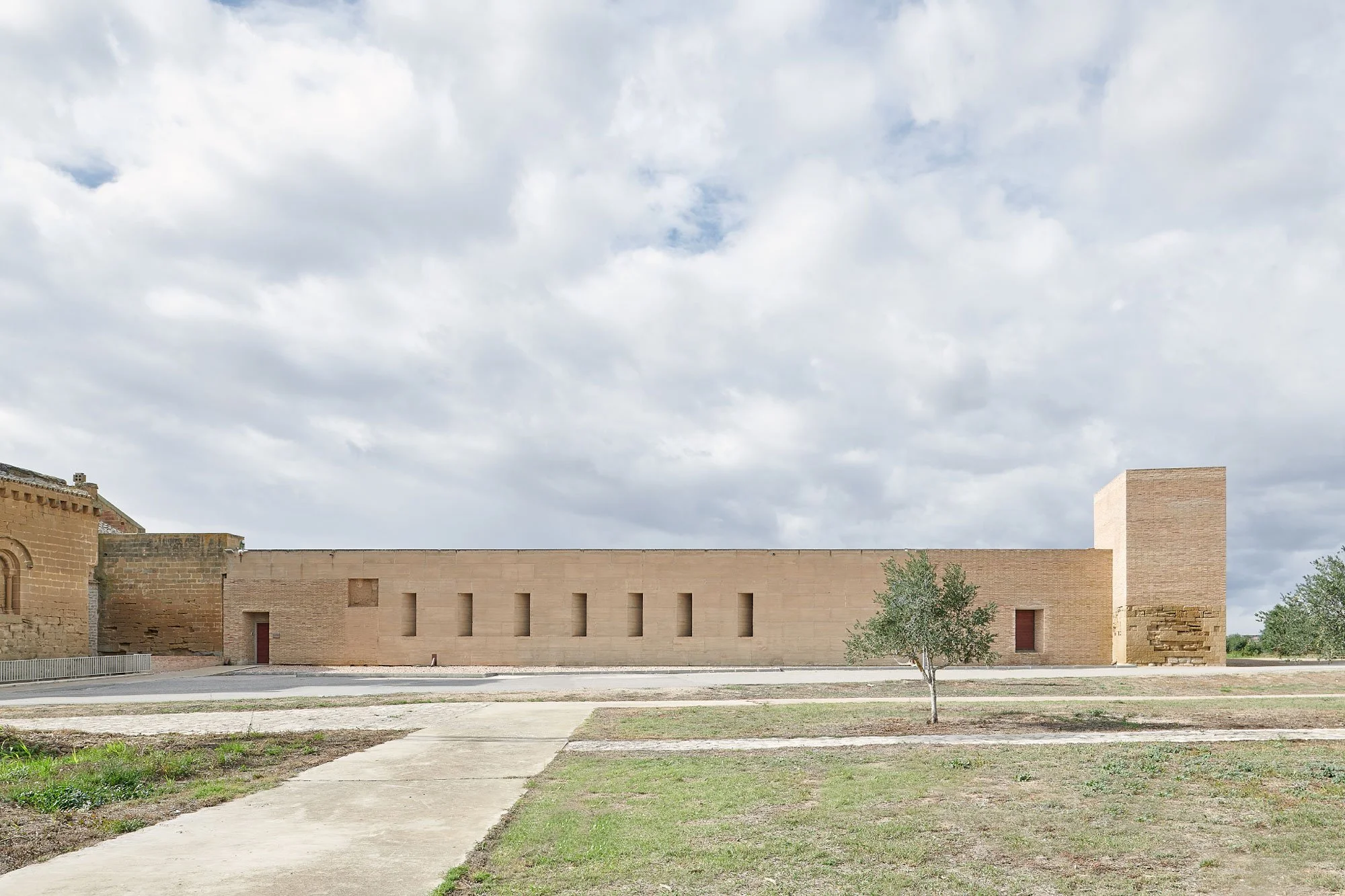
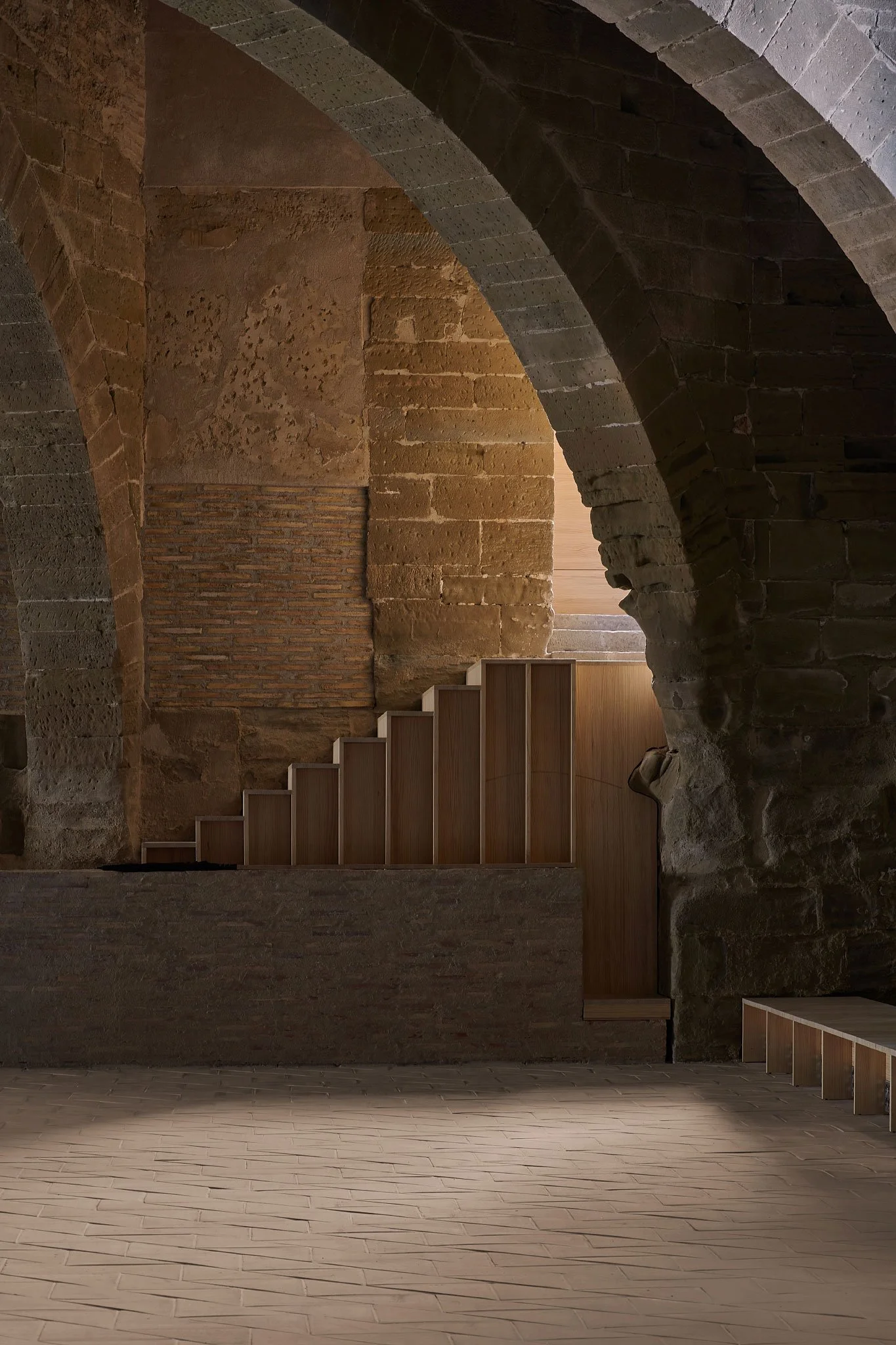
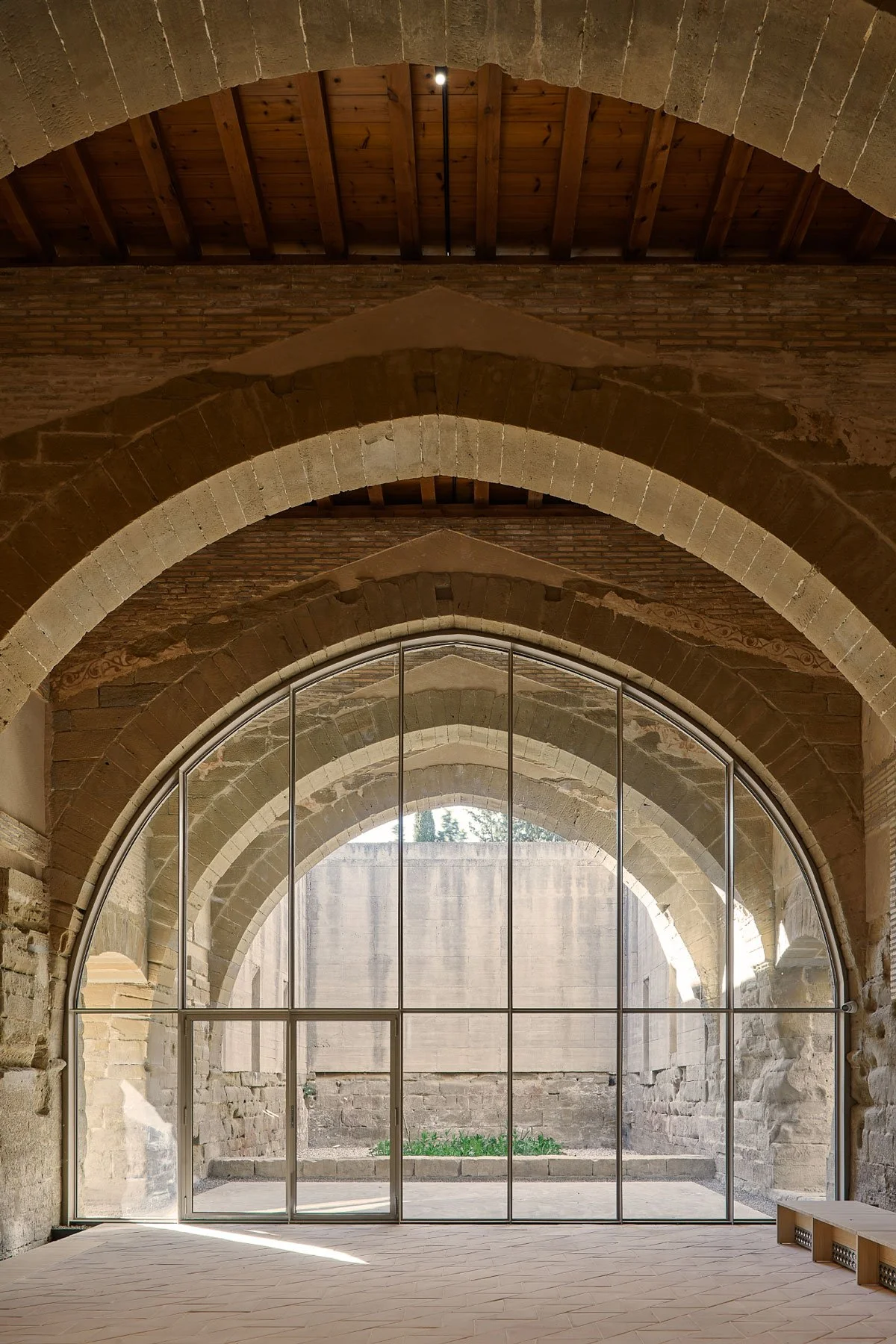
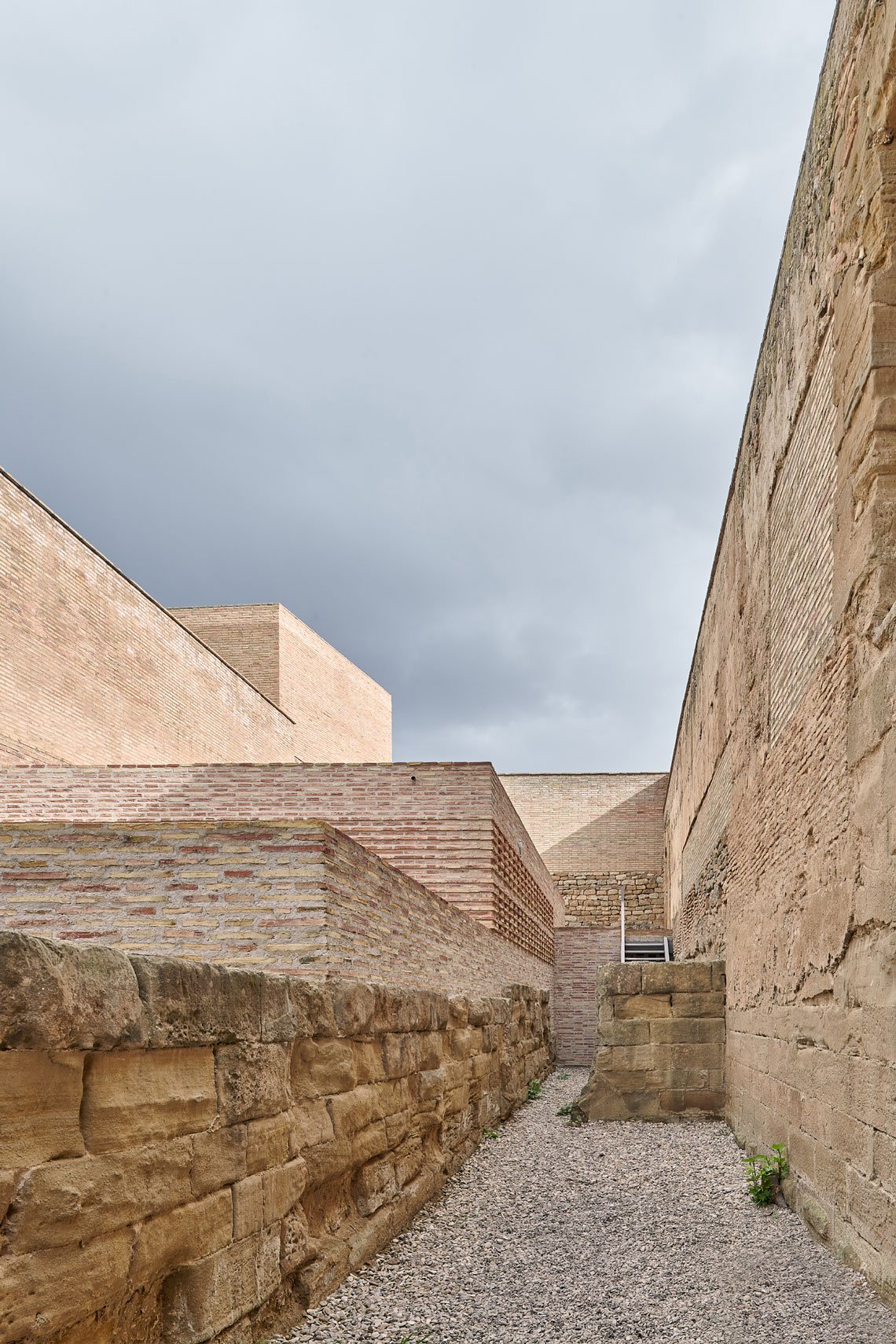
The facilities room and the air conditioning equipment have been placed in an empty space outside the warehouses, within a simple brick prism and flat gravel roof, and the conduits and wiring run through the warehouses through a chamber located under the floor that is separated from the walls to better sanitize them and resolve their encounter with the perimeter. The minimum necessary services have been placed in a "piece of furniture" that, in addition, solves an entrance located at a higher level, and the diffusion of air and the electrical connections of the display cabinets are solved from a continuous wooden bench. The pavement used is made of triangular ceramic pieces placed diagonally, and the space has been closed with a glass or stained glass window that occupies the entire section of the nave to maintain the characteristic continuity of this space by extending the view to the light focus of the final courtyard.
We believe that the old and the new are recognized in a natural way, without the final finish imposing itself on the documentary and expressive load of the walls, and that the space retains the echo of the monastic without having to recompose any of its construction stages. It can be said that it is not the monastery of a previous era, it is the monastery that has become in our time, as it has always been, but the current one attends to its values and resonances, whether they are conditions of the founding monastery or acquired over time.